Marathon: Extraction Shooters Going Mainstream?
Late last month, major publisher EA laid off 300 employees, including approximately 100 from developer Respawn. The studio, founded by former Call of Duty developers, is known for Apex Legends and the Star Wars Jedi series, and was reportedly developing a third installment in the beloved Titanfall franchise before the staff reductions. According to rumors, this now-canceled Titanfall project was an extraction shooter—a deliberately challenging PvPvE genre that remains relatively niche. A Titanfall and Apex Legends-based extraction shooter could have been the breakout title the genre needed. So if not EA, who will elevate the "Tarkov-like" from its dedicated fanbase to mainstream success? The answer may arrive in just a few months.
"As part of our ongoing focus on long-term strategic priorities, we've implemented targeted organizational changes that better align our teams and allocate resources to drive future growth," an EA spokesperson commented regarding the Respawn layoffs. This is a familiar message for EA staff. The move follows recent downsizing in other parts of EA's portfolio, including at Codemasters and BioWare, as well as a broader company-wide cut of 670 employees back in March of last year. This pattern has sparked criticism about the sustainability of the games industry and increased calls for unionization.
But what about the rumored Titanfall extraction shooter? Naturally, its apparent cancellation has left many fans disappointed; the existence (and absence) of a new Titanfall has become something of a running joke in recent years. Moreover, speculation about a new extraction shooter from a triple-A studio has drawn attention to a game style that has yet to attract a large audience. Whether or not the canceled Respawn title was indeed an extraction shooter, more people are now discussing the potential of this emerging genre.
“This is an enthusiast-driven genre that hasn't significantly broken into the mainstream market yet,” says Mat Piscatella, Video Games Industry Advisor at Circana, in a statement to IGN.
Last month, developer Bungie finally unveiled gameplay footage for Marathon, an upcoming extraction shooter that many believe could popularize the genre. The game has already faced controversy, with accusations of plagiarized art assets. Despite ethical concerns surrounding its development, early hands-on impressions from the press have been largely positive. This might be expected from a studio renowned for exceptional first-person shooter experiences like Halo and Destiny. However, when Marathon launches in September, it will enter a very different market, and the extraction shooter remains a relatively unproven genre. Will Bungie's track record and refined FPS design be enough to ensure its success? Analysts remain cautiously optimistic.
“If I were to bet on any developer to bring this genre to the mass market, it would be Bungie,” Piscatella states.
For the uninitiated, extraction shooters typically blend player-versus-player and player-versus-environment gameplay. Small squads are deployed into a map where they combat AI enemies and occasionally other player teams, complete objectives, gather resources, and then attempt to extract safely. The genre gained prominence with Escape From Tarkov, known for its punishing, high-stakes combat, which attracted a solid player base during the COVID-19 lockdowns.
If I were to bet on any developer being able to bring this genre to the mass market it would be Bungie.“
Since then, several other developers have experimented with the genre with mixed results. One notable example is last year’s Helldivers 2, developed by Arrowhead Game Studios and published by Sony. It emphasizes satirical humor, strong community interaction, and dynamic in-game events, helping it stand out among extraction shooters. Crucially, it is a purely cooperative experience, avoiding the intense PvP encounters that define games like Escape from Tarkov. According to Piscatella's data, Helldivers 2 was the eighth most-played game on Steam in April and ranked 34th on PlayStation.
“Helldivers 2 is the outlier success in this category,” Piscatella explains. “In April, about 9% of active Steam users in the U.S. played Helldivers 2, while roughly 3% of PS5 players engaged with the game at least once. No other extraction shooter reached more than 2.3% of active players on any platform where it was available.”
These figures are modest compared to dominant genres like battle royale or multiplayer FPS. As wildly popular as Helldivers 2 feels to its dedicated PlayStation community, the true mainstream consists of titles like Fortnite, Call of Duty, and EA Sports FC—games that draw vastly larger audiences. However, Piscatella emphasizes that extraction shooters are a budding genre with significant potential, facing the same early-stage hurdles as any other.
“Small or developing genres often only achieve mass appeal after one title makes it happen,” he notes. “The music/rhythm genre was fairly niche until Guitar Hero arrived. Console FPS games typically didn't sell well until Halo. MMOs represented a relatively small market share until World of Warcraft became a global phenomenon. Perhaps Marathon will do that for extraction shooters. Maybe it won't. In today's market, nothing is guaranteed for any new release.”
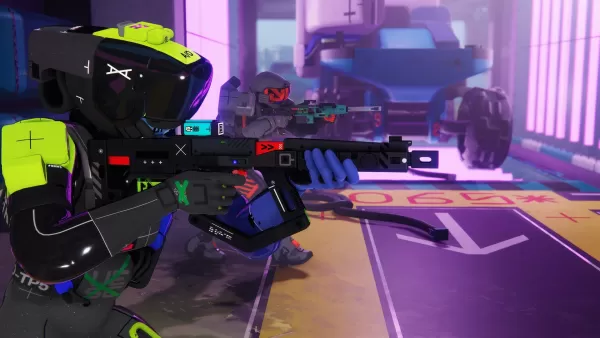
Other popular extraction shooters include Deep Rock Galactic, Hunt: Showdown, and Delta Force. The latter is a free-to-play title released late last year that has seen steadily growing popularity: as of this writing, it ranks 15th in daily players on Steam, peaking at around 135,000 concurrent users. While respectable, these numbers pale in comparison to the consistent performance of battle royale giants. Let's be honest: executives often exhibit tunnel vision, chasing the high monetization benchmarks set by Fortnite, Warzone, and PUBG.
Some argue this focus has led to creative stagnation, making studios hesitant to invest in unproven genres like extraction shooters (it's telling that Call of Duty’s attempt was an under-supported, now-abandoned mode in Warzone, rather than a standalone release). In this context, Marathon represents the first major triple-A effort to introduce the genre to a wider audience. It will need all the support it can get.
“Bungie's involvement doesn't guarantee Marathon's success,” Piscatella cautions. “To break through, it would certainly help if the game could win over dedicated genre fans who can advocate for it among friends and family.”
The biggest challenge facing Marathon is the untested nature of the extraction shooter genre as a whole.“
Beyond word-of-mouth, Bungie must ensure a smooth onboarding experience for new players. Attracting core FPS players will likely be part of their strategy, but long-term player retention will ultimately depend on the quality of the gameplay.
“It would also be beneficial if Marathon provided a gradual learning curve for players accustomed to major FPS titles like Call of Duty to encourage trial and adoption,” Piscatella adds. “It must also achieve the 'easy to learn, hard to master' balance that many mainstream hits manage to perfect.”
Ultimately, these are challenges common to any new game, and the final arbiter of success is the market, which, as Piscatella observes, is notoriously unpredictable.
“The market is very fickle right now. Players have their favorite long-running games that are regularly updated, familiar, and have strong social and monetary incentives. Many of these titles are free-to-play or easily accessible without an upfront cost. So, the obstacles for Bungie and Marathon are similar to those for any new release.”
Despite the fickle market, the primary challenge for Marathon is the overall unproven status of the extraction shooter genre. Escape From Tarkov earned praise, but its audience was boosted by pandemic lockdowns and a gameplay loop that resonated with hardcore gamers. Subsequent titles have seen only moderate success (with Helldivers 2 being the exception), which explains why studios have been cautious about committing substantial resources to such projects, especially with the proven dominance of battle royale.
In this sense, Marathon will serve as a valuable litmus test for the industry. It's notable that a studio like Bungie is fully committing to an extraction shooter in the current climate. If it is well-received, other developers and publishers will likely follow suit. Of course, numerous factors like monetization and market trends will influence the outcome, and no one can predict exactly how things will develop. But Bungie undoubtedly has the credibility and design expertise to create something remarkable. And it will take something special to transform the extraction shooter from a niche interest to a mainstream phenomenon. Come September, the entire industry will be closely watching Marathon's launch.










![Roblox Forsaken Characters Tier List [UPDATED] (2025)](https://img.actcv.com/uploads/18/17380116246797f3e8a8a39.jpg)


- 1 Silent Hill 2 Remake Confirms Xbox, Switch Release in 2025 Feb 08,2025
- 2 Fix 'Can't Connect to Host' Error in Ready or Not: Quick Solutions Jun 13,2025
- 3 Dragon Soul Tier List: Ultimate Guide May 12,2025
- 4 The Best Free Comic Book Sites and Apps in 2025 Mar 18,2025
- 5 Connect Asus ROG Ally to TV or Monitor: Easy Guide Apr 06,2025
- 6 How to Run JioHotstar on PC with BlueStacks Feb 28,2025
- 7 Assassin's Creed Shadows: Max Level and Rank Cap Revealed Mar 27,2025
- 8 "Persona Games and Spin-Offs: Complete Chronological List" Apr 09,2025




-
Top Arcade Classics and New Hits
A total of 10
-
Addictive Arcade Games for Mobile
A total of 10
-
Android Apps for Video Content Creation
A total of 10